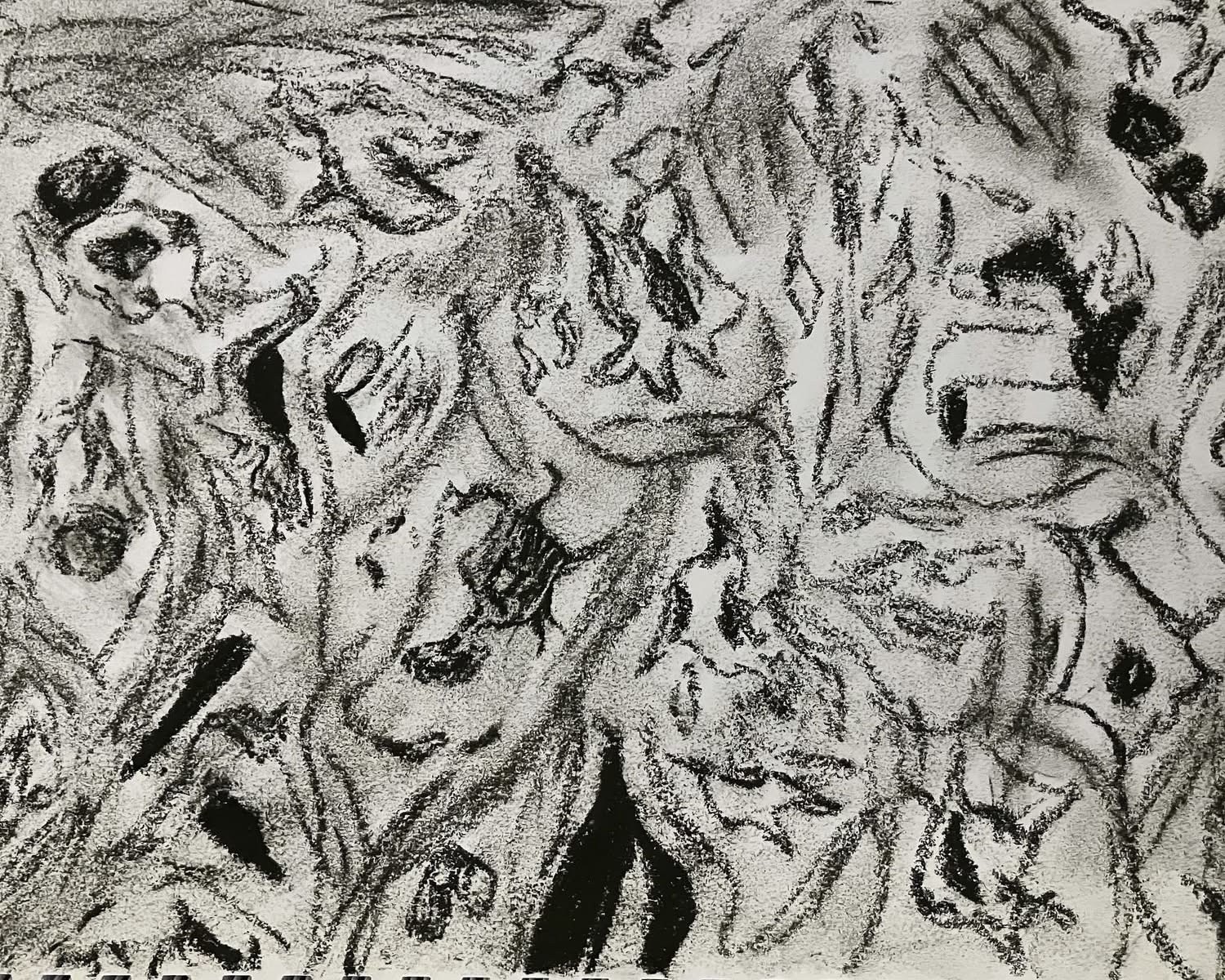
Psoas: the tenderloin
DOI:
https://doi.org/10.36399/gc35y524Abstract
Xinyi Jiang was introduced to psoas through yoga, back pains and sciatica that had strong opinions about modern life. Discovering that this deep, ancient muscle powers both flight and fright, she began reflecting on how far contemporary humans have drifted from their evolutionary design. This poem is her attempt to listen to what the body has been quietly saying all along.
References
Pethick, D. W., Harper, G. S., Hocquette, J. F., & Wang, Y. H. (2006). Marbling biology—What do we know about getting fat into muscle? Australian Beef – The Leader Conference.
Raji, C. A., Meysami, S., Hashemi, S., Garg, S., Akbari, N., Gouda, A., Chodakiewitz, Y. G., Nguyen, T. D., Niotis, K., Merrill, D. A., & Attariwala, R. (2025). Psoas muscle sarcopenia predicts brain volume loss on MRI in 7,149 individuals. Alzheimer’s & Dementia: The Journal of the Alzheimer’s Association, 20(Suppl. 9), e094146. https://doi.org/10.1002/alz.094146