Mycelium
DOI:
https://doi.org/10.36399/gmnwy924Keywords:
Mycelium, Fungi, dementia, neuroregenerationAbstract
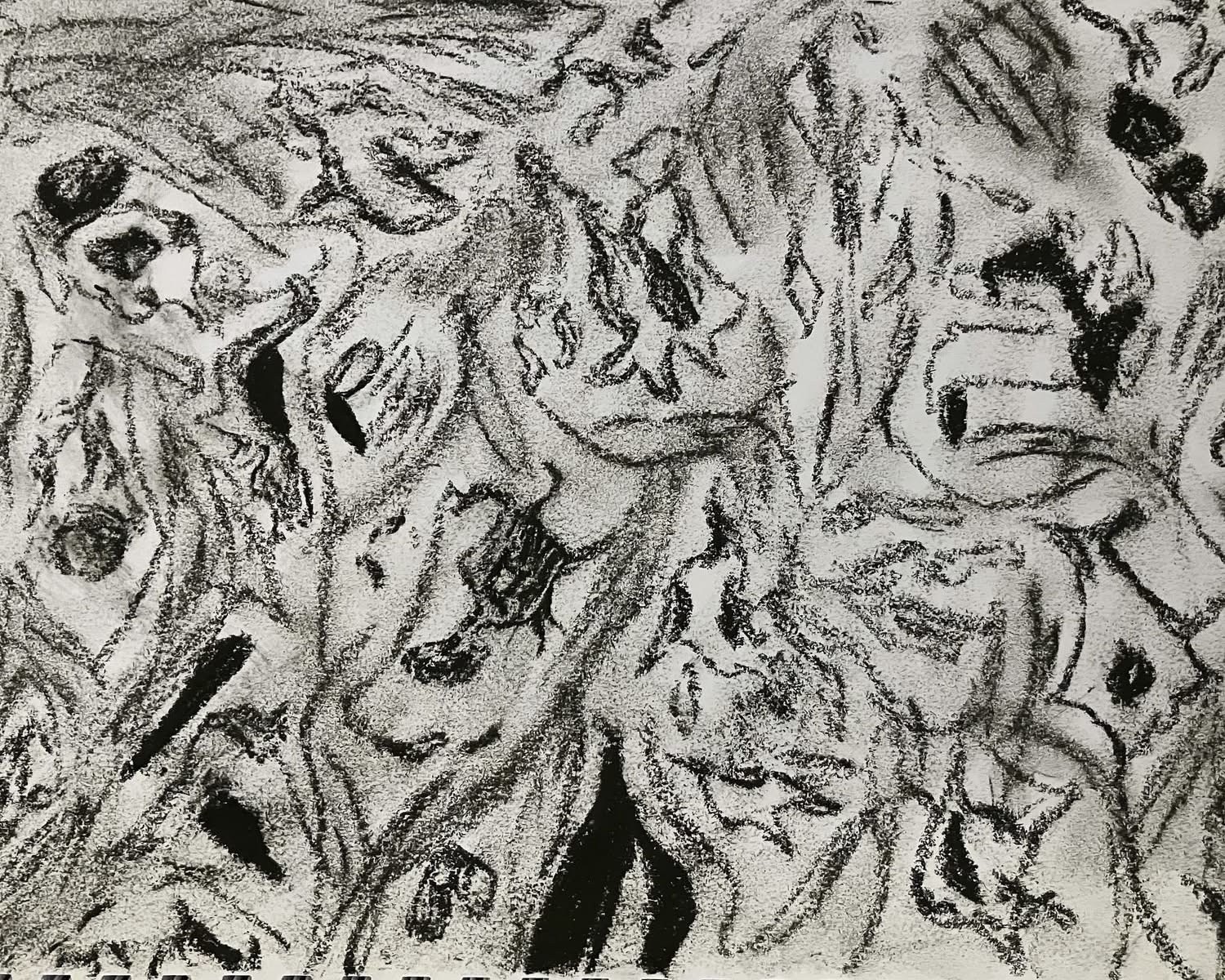
Eilidh Eglinton’s fascination with fungi was nurtured by recent popular interest in this curious kingdom of life — to which modern medicine owes so much — as well as by growing her own. The cognitive-enhancing properties of Lion’s Mane mushroom inspired an imaginative exploration of potential medical applications in dementia, the effects of which she has seen both professionally through her work as a medical doctor, and more personally through family experience.
References
Griffiths, R. R., Johnson, M. W., Carducci, M. A., Umbricht, A., Richards, W. A., Richards, B. D., Cosimano, M. P., & Klinedinst, M. A. (2016). Psilocybin produces substantial and sustained decreases in depression and anxiety in patients with life-threatening cancer: A randomized double-blind trial. Journal of Psychopharmacology, 30(12), 1181–1197. https://doi.org/10.1177/0269881116675513
Ma, B.-J., Shen, J.-W., Yu, H.-Y., Ruan, Y., Wu, T.-T., & Zhao, X. (2010). Hericenones and erinacines: Stimulators of nerve growth factor (NGF) biosynthesis in Hericium erinaceus. Mycology, 1(2), 92–98. https://doi.org/10.1080/21501201003735556
Mori, K., Inatomi, S., Ouchi, K., Azumi, Y., & Tuchida, T. (2009). Improving effects of the mushroom Yamabushitake (Hericium erinaceus) on mild cognitive impairment: A double-blind placebo-controlled clinical trial. Phytotherapy Research, 23(3), 367–372. https://doi.org/10.1002/ptr.2634
Musk, E. (2019). An integrated brain-machine interface platform with thousands of channels. Journal of Medical Internet Research, 21(10), e16194. https://doi.org/10.2196/16194
Trinh, T., Ouellette, R., & de Bekker, C. (2021). Getting lost: The fungal hijacking of ant foraging behaviour in space and time. Animal Behaviour, 181, 165–184. https://doi.org/10.1016/j.anbehav.2021.09.010