Duality
By Emma Reid
All is calm, peaceful, serene.
The microglia are at rest.
Long, lithe limbs softly sway.
Patiently sensing, searching.
They wait.
There s trouble ahead.
A blockage has brought all blood flow to a standstill.
No movement, no passage, no delivery.
No oxygen, no glucose, no hope?
A fire begins to burn at the blockage site and starts to spread
It s the sign the microglia were waiting for.
They awaken, and the change begins,
Small bodies start expanding.
Limbs become short and thick.
Ready for action!
But not all microglia want to fight the flames.
Some add fuel to the fire.
Pro-inflammatory cytokines are the weapon of choice.
Yes, that ll do the job.
They look on as the brain begins to burn.
Wait all is not yet lost!
The flames can still be overcome!
A new band of microglia have come to save the day!
They release anti-inflammatory mediators,
And fight tirelessly to restore, repair, and replenish.
But the clean-up is long, and arduous.
Engulf the dead, the dying, and the weak.
New cells, new vessels, and new hope!
The fire has finally been put out.
Until next time
Scientific Statement
The author drew inspiration for this poem from her own scientific
research in the field of ischaemic stroke. Duality explores the opposing roles
of microglial cells, which become activated after a blood clot within a brain
blood vessel leads to a stroke. Microglia are small cells that are found within
the central nervous system and act as immune scavengers. At rest, they survey
the brain s environment, and become activated when they detect any neurotoxins,
or dead/dying cells. Activation leads to a change in morphology, where
microglial cells become spherical in shape, and their processes thicken, and
shorten. They are then able to engulf the potentially harmful substances to
remove the threat and protect the brain.
However, there are elements of light and shade in the role of
microglial cells following a stroke - a concept which is examined in this
piece. Microglial cells can adopt one of two different activation states the
M1 or the M2 phenotype. In the early phase of ischaemic stroke, activated M1
type microglia release cytokines, which promote neuroinflammation, and
contribute to brain injury. In the hours and days following the stroke,
activated M2 type microglial cells, act to promote brain repair, by releasing
neuroprotective factors, which aid the recovery and repair of brain tissue and
promote the formation of new blood vessels. The conflict between the two
microglial activation states is explored as their opposing responses to a fire
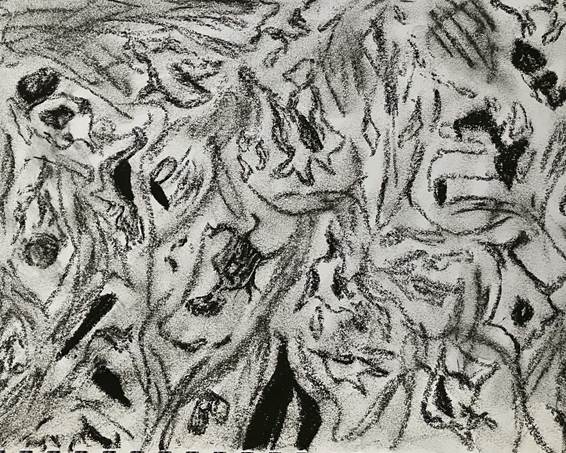
breaking out within the post stroke brain. The accompanying image, drawn in
charcoal by the author, represents the activation of microglia within the
ischaemic brain after stroke, and was inspired by a photomicrograph from one of
her research studies.